
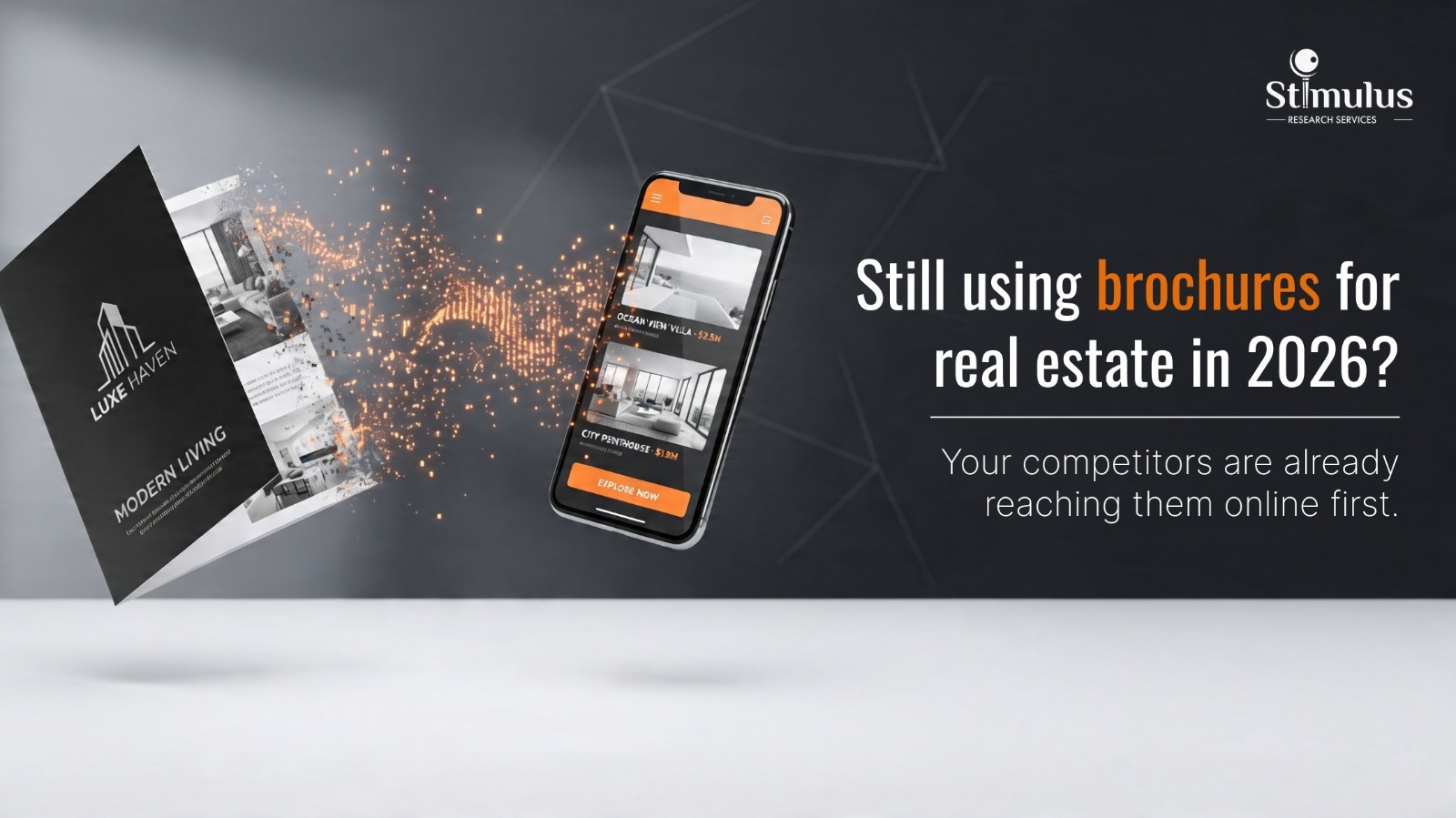
Your competitors are already reaching them online first.
Real estate marketing has changed dramatically over the past few years. What once depended heavily on brochures, site visits, and newspaper listings has now shifted toward structured digital ecosystems that influence buyers long before the first conversation begins.
In 2026, visibility alone is no longer enough. Buyers expect information, trust signals, and seamless digital experiences before they engage with a developer or property consultant.
Buyers Start Their Property Journey Online
Today’s property decisions begin with search, comparison, and research. Before scheduling a visit, buyers explore locations, amenities, pricing expectations, and developer credibility online.
This makes digital presence the first and most important interaction point in modern real estate marketing.
A strong website, structured listings, and consistent brand communication help projects stand out in competitive markets.
Digital Platforms Are Replacing Traditional Brochures
Printed brochures once carried project information. Today, interactive websites, walkthrough videos, and smart landing pages perform that role more effectively.
Modern real estate marketing now includes:
- project-focused landing experiences
- virtual walkthrough integrations
- location-based targeting campaigns
- structured lead generation funnels
- social media engagement strategies
These tools help buyers move faster from interest to enquiry.
Lead Generation Is Now Strategy-Driven
Earlier, marketing relied heavily on physical visits and local outreach. In 2026, structured lead generation systems help real estate businesses identify serious buyers earlier in the decision cycle.
Performance campaigns combined with search visibility ensure projects reach the right audience at the right time.
This improves both enquiry quality and conversion efficiency.
Credibility Builds Faster Through Digital Presence
Buyers today evaluate developers before they connect with them. They look for:
- project transparency
- brand consistency
- online reviews
- website experience
- communication clarity
A professionally developed digital platform strengthens trust even before the first site visit.
Technology Is Powering the Shift to Digital Domination
Modern real estate marketing now depends on integrated support from:
- website development
- digital marketing strategy
- performance campaigns
- analytics-driven targeting
- scalable technology platforms
Together, these create a connected marketing ecosystem instead of isolated promotion activities.
How Stimulus Supports Real Estate Marketing Transformation
At Stimulus, real estate marketing is supported through research-driven strategy, structured digital platforms, and performance-focused execution frameworks designed to improve project visibility, engagement, and enquiry quality.
Because in 2026, successful real estate marketing is no longer about distributing brochures.
It is about building digital experiences that influence decisions before the site visit begins.