
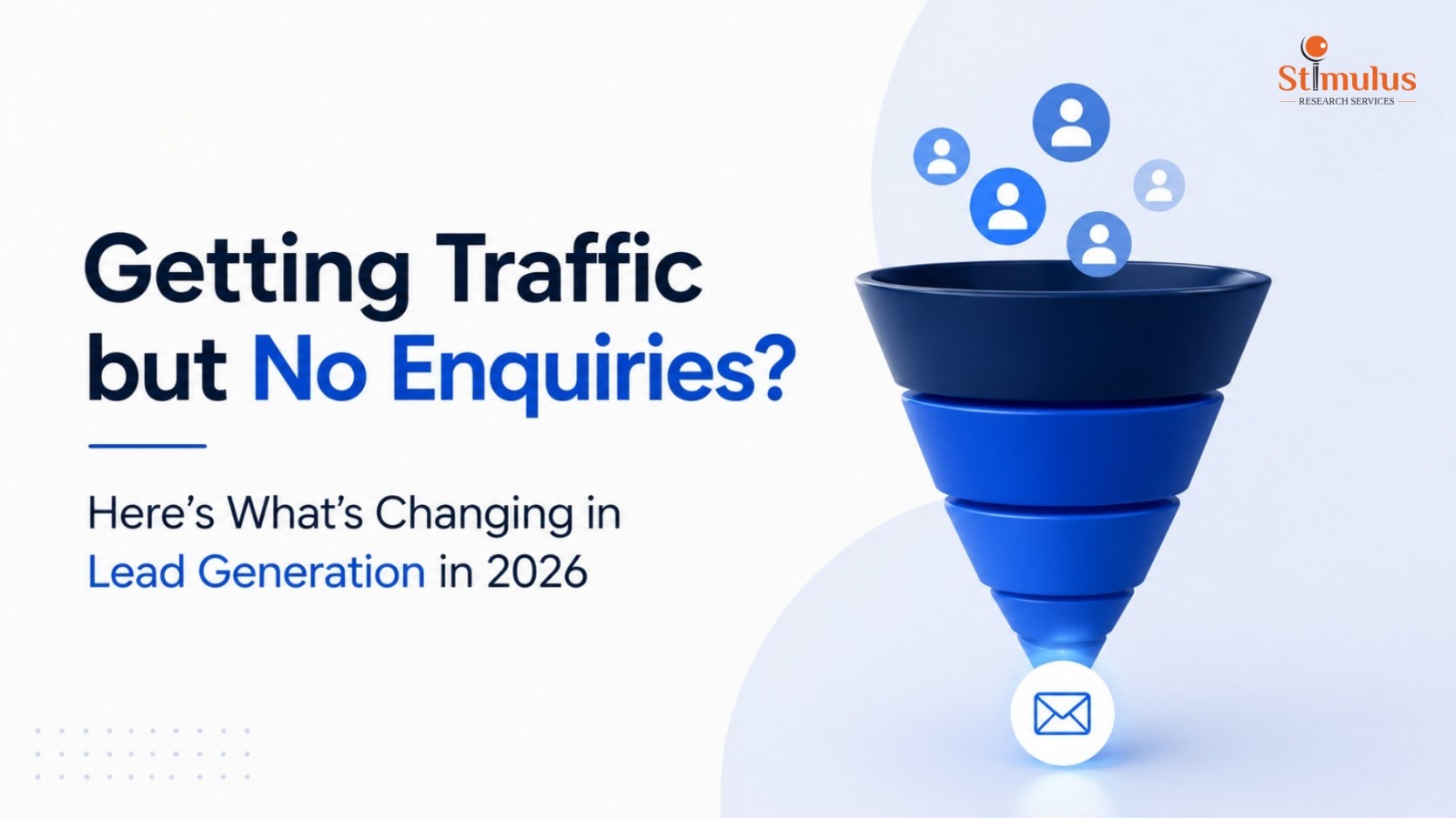
Lead generation has become one of the most critical drivers of business growth in today’s digital environment. Yet many organizations still measure success only through visibility or website traffic, without focusing on whether those interactions actually convert into opportunities.
In 2026, lead generation is no longer about attracting attention alone. It is about building structured pathways that move audiences from interest to decision.
Industry data reflects this shift clearly. Today, lead generation remains the top priority for nearly 50% of marketers, yet 61% still say generating and converting quality leads is their biggest challenge.
Why Lead Generation Has Become a Business Priority
Modern buyers research extensively before engaging with companies. In fact, most decision-makers now complete a significant portion of their evaluation before speaking with a sales team.
This means organizations must create digital systems that capture interest earlier in the journey instead of relying only on direct outreach. Businesses that invest in structured lead-generation frameworks improve both enquiry quality and conversion readiness over time.
Across industries, organizations generate an average of 1,877 leads per month, yet around 80% never convert into customers due to weak qualification and nurturing systems.
Lead generation today is not a volume challenge. It is a strategy challenge.
Why Traffic Alone Does Not Create Opportunities
Many businesses invest heavily in campaigns expecting traffic to translate directly into growth. However, the average lead-to-customer conversion rate across industries remains close to 2.9%, showing how important structured conversion systems have become.
Without strong landing journeys, follow-up systems, and qualification logic, even high-traffic platforms fail to generate consistent business outcomes.
Effective lead generation begins when engagement is supported by clarity and structure.
Digital Channels Are Now the Primary Lead Sources
In 2026, lead generation is largely driven through digital platforms rather than traditional outreach channels. Research shows that 85% of B2B leads are generated through digital channels, making online visibility a central growth requirement for modern organizations.
Content strategy, search visibility, and structured communication now influence how early prospects enter the decision journey.
This shift is changing how businesses approach marketing investment decisions.
Lead Quality Matters More Than Lead Volume
Organizations today are moving away from measuring success through the number of leads generated. Instead, they are focusing on whether those leads match their ideal audience and show decision readiness.
In fact, 68% of marketers say improving lead quality is their top mission, highlighting the importance of targeting and qualification frameworks.
Structured lead-generation strategies improve conversion efficiency by ensuring the right audiences enter the funnel at the right stage.
Lead Nurturing Is the Missing Link in Most Growth Strategies
One of the biggest gaps in lead-generation performance is follow-up consistency. Studies show that 79% of leads never convert into sales due to weak nurturing processes, not because they lacked initial interest.
Modern lead-generation systems therefore focus on engagement continuity rather than one-time capture.
When communication continues after the first interaction, conversion confidence improves significantly.
Technology Is Reshaping Lead Generation in 2026
Automation, analytics, and AI-assisted qualification are transforming how businesses capture and manage opportunities. Organizations using marketing automation workflows often see stronger engagement continuity and improved conversion performance.
Companies implementing automated nurturing processes can achieve up to 50% higher conversion rates, demonstrating how technology strengthens the effectiveness of lead-generation ecosystems.
This makes structured digital infrastructure an essential component of modern lead-generation strategy.
Why Integrated Lead Generation Performs Better
High-performing organizations no longer treat lead generation as a single campaign activity. Instead, they connect:
website experience
search visibility
content strategy
performance campaigns
analytics tracking
into one continuous engagement system.
This integrated approach improves both enquiry quality and long-term pipeline stability.
How Stimulus Supports Structured Lead Generation
At Stimulus, lead generation is approached as part of a connected digital growth framework supported by research-driven consulting, scalable platform development, and performance-focused execution strategies.
Instead of focusing only on lead volume, the objective is to help organizations build structured pipelines that improve engagement quality, conversion readiness, and long-term business opportunities.
Because successful lead generation today is not about generating more contacts.
It is about generating the right conversations. 🚀